Introduction
The Tech Council of Australia released its SME AI report on October 22, 2026. Delwood Advisory undertook the research with the council, Employment Hero, Google and Deputy. The publication date is not the observation date for every statistic it contains.
What the research adds
The report's source and assumption trail changes how its headline should be read:
- Data period: page 15 labels the starting adoption distribution H2 CY25, meaning the second half of calendar 2025, and attributes it to NAIC adoption data.
- Starting position: 26% overall adoption, comprising 21% limited use and 5% broad use.
- Base scenario: page 42 assumes 53% overall adoption, comprising 27% limited and 26% broad use, associated with $93bn additional annual value.
- Lower scenario: 46% overall adoption is associated with $61bn. The page describes a five-year horizon, calls the figures indicative and assumes stable employment for hourly productivity ratios.
Those are modeled scenarios, not realized earnings. The foreword's roughly one-in-four shorthand should not be mistaken for a fresh October survey. Page 37 also attributes its 94% productivity-benefit figure to Salesforce's 2024 research among SMEs using AI; that is a different evidence base from the economy-wide model.
What we would test first
A smaller business needs a measurement card for its own task before borrowing a return figure from the report. Consider a hypothetical trial that turns approved site-visit notes into a draft work summary. The output may organize the notes, but prices, exclusions and the decision to send remain with the responsible person.
Write the card before trying a tool:
- Task boundary: begin with a complete set of permitted notes and finish with a summary accepted by the same reviewer used for the manual comparison.
- Quality conditions: preserve quantities and exclusions, identify unanswered questions and trace factual statements to the notes.
- Baseline: record active preparation, review and correction time using the existing method. Include difficult examples rather than selecting only neat notes.
- Assisted run: use the same cases and acceptance rules; record tool charges, active preparation, review, correction and manual fallback separately.
- Decision: compare accepted summaries, unresolved cases and combined cost. A quicker first draft does not count as a saving if corrections absorb the difference.
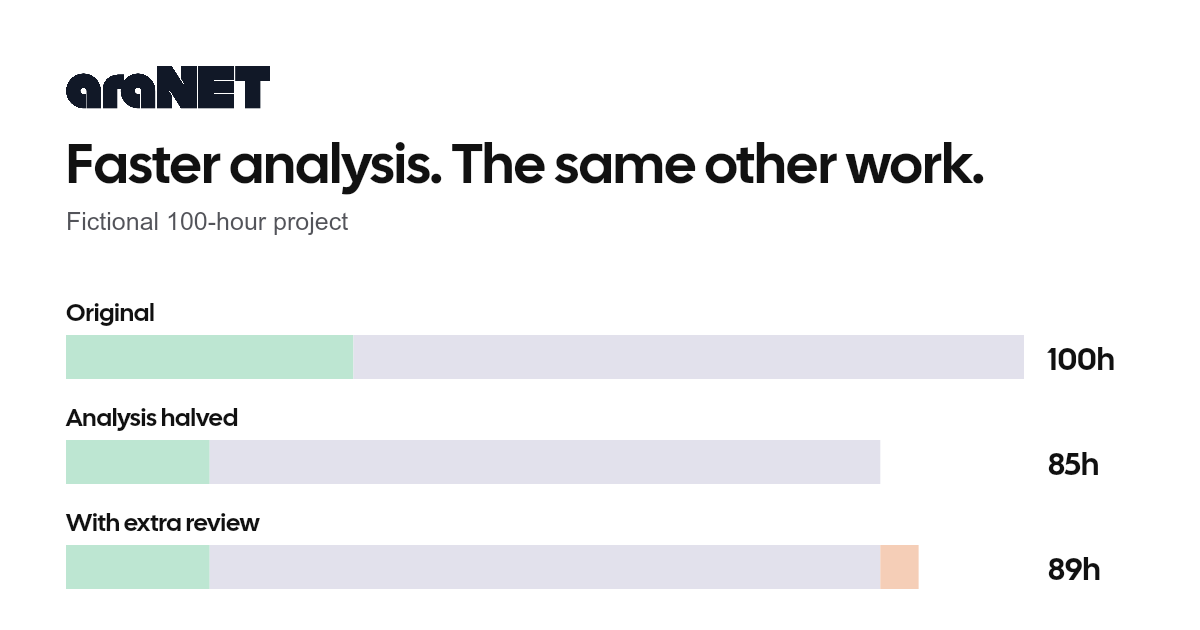
Keep reviewer labor separate from provider charges in the results. Time released is also different from cash saved: reduced minutes only become a financial saving under the business's actual staffing and workload conditions. Record where that time went before claiming an operating benefit.
This is our proposed local measurement method, not a finding from the Australian study or a report of araNET customer results. It lets an owner decide whether the task merits a wider trial without assuming the report's average business resembles their own.
Availability and limits
The report is publicly available through the council. Its Australian scope, industry participation, mixed source dates and modeled adoption assumptions belong beside its conclusions. They do not establish equivalent uptake or economic gains for a Utah business, and the research release does not grant access to any particular AI product.