Introduction
Anthropic released Claude Fable 5.2 and Claude Mythos 5.2 on November 9. The company positions them for difficult technical work, including coding and research. For developers who assemble their own API requests, one migration detail deserves attention before the model name changes: a stored conversation may contain reasoning tied to its earlier context. Release announcement
Fable 5.2 applies its conversation-prefix check to every account. An integration that quietly rewrites an earlier turn can therefore fail after the upgrade even if it worked with Fable 5.1 on an older account. This is documented migration behavior, not a failure we observed in a paid API test. Migration guide
What an earlier edit changes
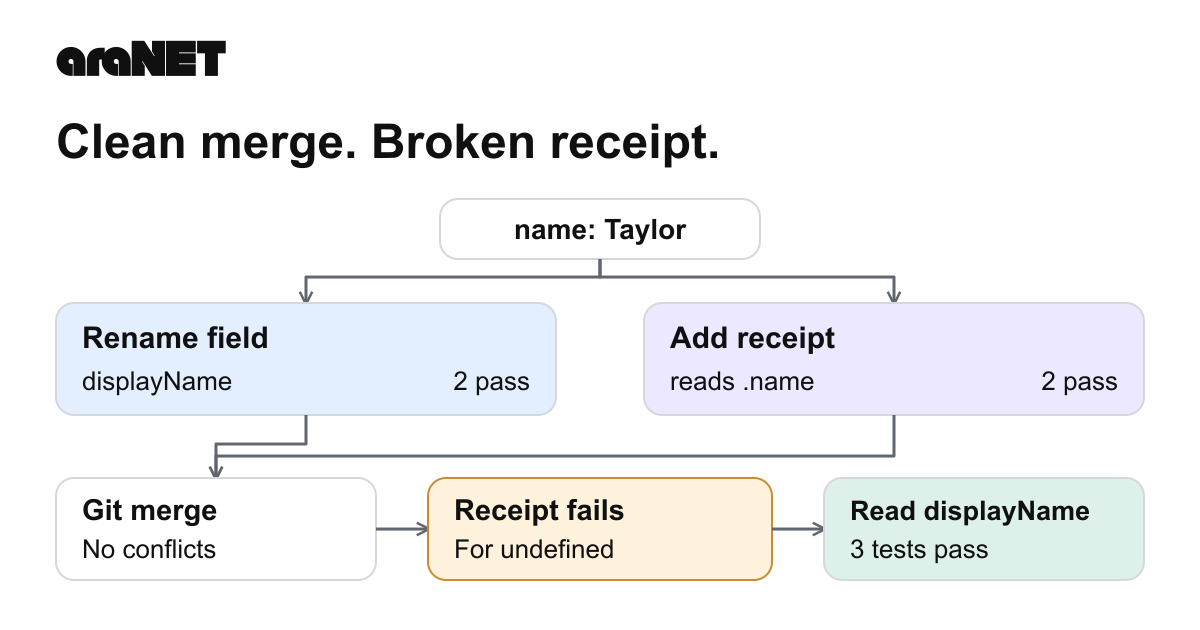
A retained thinking block is bound to the system prompt, tools and messages that preceded it. If that earlier context changes, sending the block back with the default mismatch behavior can produce a 400 error. Repeating the same request body does not repair it. Prefix check and error handling
Consider a fictional assistant helping plan a website. The first user message asks for a three-page site. After a reply, the user asks for a fourth page. A request builder could represent that in two ways:
- Keep the first message and append the new request for another page.
- Rewrite the first message to say four pages while retaining the assistant’s later thinking block.
The first preserves the earlier context. The second changes what that reasoning originally followed. A tidier-looking transcript can therefore be the wrong transcript to send back.
This is particularly relevant to custom history stores, summarizers and middleware that rebuild messages. Anthropic says the migration does not change this behavior for users whose history is managed by Claude Code, claude.ai, Claude Managed Agents or the Claude Agent SDK. Who needs to inspect their integration
A small request-builder rehearsal
We made a self-contained Python example with a fictional system instruction, tool definition and user message. It compares the stored prefix with five later request fixtures: an appended message, a rewritten earlier message, changed tools, a changed system instruction and a changed effort setting.
Download the conversation-prefix rehearsal
We ran it locally. The append and effort-only fixtures leave its compared prefix unchanged; the other three change it. The script prints which fields differ and asserts those expected results. It does not create a real thinking block, validate an Anthropic signature, call a model or predict an API response. It also does not model compaction or provider-specific exceptions.
The useful exercise is to adapt the fixture to the place where your application constructs the next request. Capture what was actually sent earlier, then compare it with what your serializer sends next. A check against the display transcript alone can miss a separate request builder rewriting history underneath it. That is our suggested inspection method, not a claim that this small checker covers the full API contract.
Correct the request, then handle the mismatch
Anthropic documents a beta option to drop invalidated thinking blocks and continue, using the anthropic-beta header value thinking-binding-controls-2026-08-01 and thinking.block_binding.prefix_mismatch_behavior set to drop_block. The response can report dropped blocks through input_transformations. Dropping blocks repeatedly can increase output tokens and change later reasoning quality; the documentation describes it as a temporary measure while the edit is fixed. Preserved thinking
For the fictional website conversation, our first choice would be to append the changed requirement. If a tool definition genuinely needs to change, we would treat that as a deliberate conversation transition and test it separately. We would record the original error, the altered request and any dropped-block signal, rather than label a retry successful merely because it returned an answer.
Access and limits remain separate decisions
Fable 5.2 is available to Claude API customers; Mythos 5.2 requires verification-program access. The model IDs are claude-fable-5-2 and claude-mythos-5-2 on the Claude API. Switching a conversation from these models to another model can drop reasoning that the destination cannot read. Model availability and compatibility
Standard API pricing is $8 per million input tokens and $40 per million output tokens. Optional fast mode is priced at $16 and $80 respectively; availability depends on the platform. These are published token rates, not the measured cost of our example. Pricing and fast-mode availability
Both are Covered Models. Anthropic describes a default minimum 30-day retention policy and specific, temporary zero-retention arrangements for eligible customers transitioning toward Enterprise Frontier Safeguards. Confirm the arrangement that applies to your account before using sensitive records. Covered Models policy
A useful first migration task is a saved-conversation replay using invented records. Check what your code changes between turns, then evaluate the model on the work you actually need. A capability upgrade and a compatible conversation store are separate things to establish.