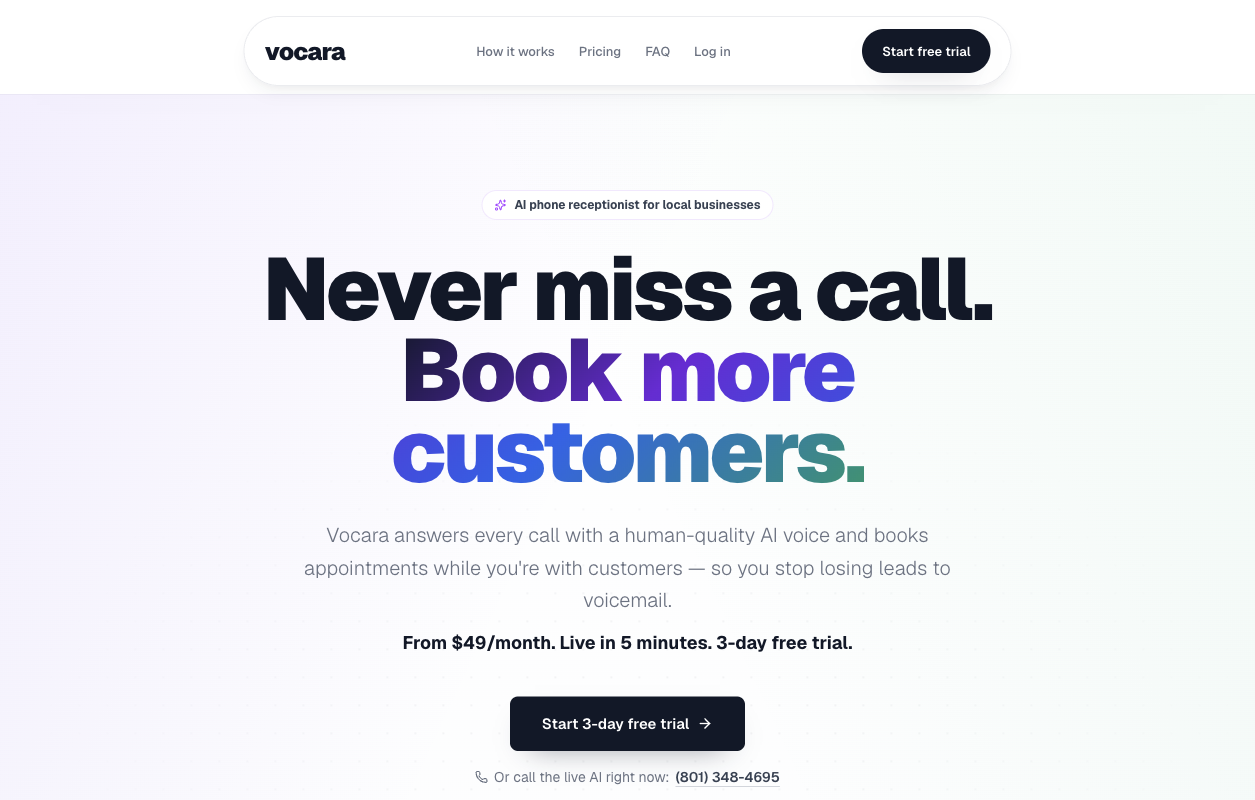
Vocara’s use case starts with an incoming call, but the design problem continues after the conversation ends. A business needs to understand what was requested, who should respond and what happens next. The useful output is not just a transcript; it is context someone can act on.
A caller may want an appointment, a service question answered or a person to call them back. Those are different paths. A voice workflow needs the business’s rules and an honest fallback, rather than treating every conversation as the same successful booking.
Make the handoff as useful as the answer.
01
Answer the call
Give the caller a clear starting point and establish the reason for the conversation.
02
Capture the context
Organize the request, contact details and service information needed for a useful handoff.
03
Route the next step
Support a booking or follow-up using the rules and availability configured for the workflow.
04
Keep a useful record
Bring notes, a summary and the next action together for the owner to review.
Inside the decisions.
Design the conversation and the record together.
A helpful answer can still lead to a poor handoff. This use case considers both sides: what the caller needs to communicate and what the owner needs to read afterward. A summary should preserve the request, not just compress the words.
Let business rules shape the next step.
An appointment workflow depends on the right service, available times and the business’s own rules. A follow-up may be the appropriate outcome instead. The design should keep those paths distinct and avoid calling an unconfirmed action a completed booking.
Leave room for review and exceptions.
Some conversations need a person. Clear ownership and readable context give an owner a place to pick up the work. This is why the review step belongs in the workflow, rather than being treated as an administrative task after the product experience has ended.
A conversation should lead somewhere useful.
A voice workflow is only as useful as the work someone can pick up afterward. Start with the request, the business rules and the owner of the next action. Vocara is presented here as a workflow use case, not a current araNET service offer.